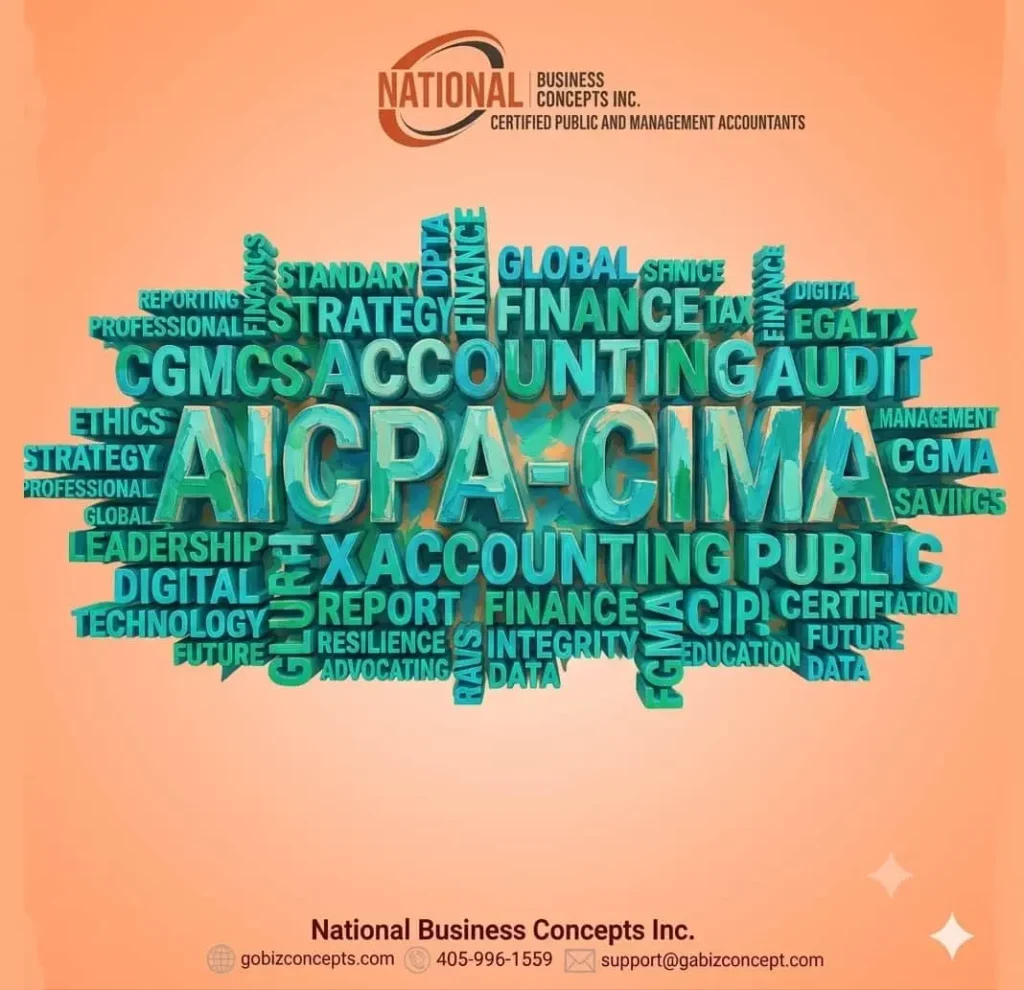
The American Institute of Certified Public Accountants (AICPA) was founded in the late 19th century and evolved into a global professional body. Its mission is the advancement of the accounting profession. To that end, standards are issued in auditing, tax services, consulting services, and peer review to ensure consistency and quality in practice. Its membership is extended widely, supported by its alliance with the Chartered Institute of Management Accountants (CIMA). Further, it offers certification. Its relation to and oversight by regulatory bodies reinforces its objectives; in conjunction, its own codes promote ethical conduct amongst its membership, ensuring professional accountability.
AICPA History/Mission
More exactly, the AICPA was founded in 1887 as the American Association of Public Accountants but later renamed in 1957 to reflect its broader professional scope. Its mission is the advancement of trust, integrity, and opportunity within the accounting profession–professionalism. Over time, standards have been issued in auditing, tax services, consulting services, and peer review to ensure quality and consistency in practice. Membership has been expanded globally, strengthened through its alliance with CIMA, and certifications, i.e., Certified Public Accountant (CPA) and Chartered Global Management Accountant (CGMA.) Meanwhile, its relation to GAAP and oversight by the SEC has reinforced regulatory compliance, while ethical conduct has been governed by the AICPA Code of Professional Conduct.
CIMA Alliance
The global alliance of the AICPA with the CIMA was established in 2017 through the creation of the Association of International Certified Professional Accountants. As already suggested, the alliance was formed to unify expertise in public accounting and management accounting, thereby strengthening the profession’s global influence. A rationale was provided by the need to expand international reach, enhance professional mobility, and integrate strategic management with assurance and compliance functions. It is through this partnership that the CGMA designation is jointly awarded, enabling professionals to demonstrate advanced competence in finance, strategy, and leadership. Again, the alliance reinforces trust, broadens membership, and aligns accounting practices with global business demands.
The CIMA is traced to its founding in 1919 in the United Kingdom as the Institute of Cost and Works Accountants. It was later granted a Royal Charter in 1975 to recognize management accounting as a distinct profession. Its mission is the advancement of management accounting as a discipline that integrates finance with business strategy, operations, and sustainability. Standards and qualifications have been issued to prepare professionals for roles in performance management, cost analysis, and decision support. Membership has been expanded globally through its alliance with the AICPA, and its reputation has been bolstered by the CGMA designation
AICPA Membership
The membership of the AICPA establishes it as one of the largest professional networks in accounting, representing CPAs, accounting professionals, and students across more than 150 countries. Since its founding, membership has expanded to include over 689,000 individuals worldwide, increased by its alliance with the CIMA. Its coveted credentials, such as CPA (awarded to professionals meeting rigorous education, examination, and experience requirements) and CGMA (recognising expertise in management accounting, strategy, and leadership) are awarded to members, enabling professional recognition and mobility. In addition, access to continuing education, advocacy, and resources supports career development. Membership is defined by adherence to professional standards, compliance with GAAP and SEC oversight, and commitment to ethical conduct under the AICPA Code of Professional Conduct.
Auditing Standards
Auditing standards of the AICPA are issued through Statements on Auditing Standards (SASs) by the Auditing Standards Board and have been designed to govern audits of nonissuers (private companies or organizations that do not issue publicly traded securities and are not required to file regular financial statements with the SEC,) ensuring consistency and reliability in financial reporting. These standards are organized into AU‑C sections that address general principles, risk assessment, audit evidence, use of the work of others, reporting, and special considerations. Compliance with these standards is required to maintain professional quality, while alignment with Generally Accepted Auditing Standards (GAAS) is reinforced. Ethical conduct is supported by the AICPA Code of Professional Conduct.
Tax Services Standards
Tax services standards of the AICPA have been established to guide CPAs in providing ethical and competent tax practice. These standards, known as Statements on Standards for Tax Services (SSTS), have been designed to ensure compliance with applicable laws and regulations while promoting integrity and professionalism. Guidance has been issued on responsibilities such as recommending tax positions, preparing returns, and representing clients before taxing authorities. Reliance on reasonable assumptions and proper documentation has been required, while aggressive or unsupported positions have been discouraged. The mission of these standards has been defined by the protection of the public interest, the enhancement of trust in tax practice, and the reinforcement of professional accountability.
Consulting Services Standards
Consulting services standards of the AICPA have been established to provide guidance for CPAs engaged in advisory and consulting work. These standards, known as Statements on Standards for Consulting Services (SSCS), have been designed to ensure that professional competence, objectivity, and integrity are maintained in engagements that involve analysis, advice, and recommendations. Responsibilities have been defined to include proper planning, communication of findings, and documentation of work performed. The standards have emphasized that consulting services must be delivered with independence of judgment and adherence to ethical principles. The standards have been directed toward protecting the public interest, enhancing the credibility of advisory services, and reinforcing accountability within the profession.
AICPA Code of Professional Conduct
The AICPA Code of Professional Conduct is the ethical framework governing the responsibilities of Certified Public Accountants. Principles of integrity, objectivity, due care, and public interest have been emphasized to ensure that professional services are delivered with trust and accountability. Rules have been issued to address independence in auditing and attestation engagements, responsibilities in tax and consulting services, and obligations in maintaining confidentiality and competence. Compliance with these standards is required of all members, and enforcement is supported through disciplinary processes. The Code aims to protect the public, enhance credibility in financial reporting, and reinforce professional responsibility across the accounting profession.
Conclusion
The American Institute of Certified Public Accountants (AICPA), founded in 1887 as the American Association of Public Accountants and renamed in 1957, has evolved into a global professional body dedicated to advancing trust, integrity, and opportunity in accounting. Standards have been issued in auditing, tax services, consulting services, and peer review to ensure quality and consistency. In 2017, a global alliance with CIMA created the Association of International Certified Professional Accountants, strengthening international influence and jointly awarding the CGMA credential. Membership has expanded to over 689,000 worldwide, while ethical conduct has been governed by the AICPA Code of Professional Conduct, reinforcing professionalism and accountability across diverse practices.
By Richard Thomas
